
Replacing windows is one of the few remodels you actually feel on the bill
A single-pane window lets the sun straight into the room. A double-pane with a low-E coating reflects it before it gets in, without darkening your home. We install across Dallas–Fort Worth and give you the price in writing from the first visit.
It’s not in your head: cooling a home in Texas costs more than almost anywhere else
These are market numbers, not promises from us. How much your own bill drops depends on your house — that’s what the visit is for.
What a Texas household pays on average for electricity in summer — 26% above the national average.
Texas electricity rate comparisons, 2026The share of the summer bill that goes to air conditioning alone.
Texas residential consumption data, 2026What the average DFW bill climbs to from June through September (versus about $170 the rest of the year).
Dallas electricity billing averages, 2026The share of household income a Texas family spends cooling the home. The national average is 2.9%.
State-by-state cooling cost comparisons, 2026Be careful with anyone who promises you an exact savings percentage without having seen your home: there is no way to know that from an ad. What can be measured is how much heat is coming through your windows today, and that’s what we check during the visit.
Six signs you can check today from your own living room
You don’t need anyone to come out to notice them. If two or more sound familiar, it’s worth having them measured.
The glass is hot to the touch
On a single-pane window the sun hits the glass directly and the heat passes into the room with nothing to slow it down. If you can’t keep your hand on it at midday, that’s the heat your AC is fighting.
They look fogged up from inside
If the window is double-pane and fog or droplets appear BETWEEN the two panes, the seal has failed. It no longer insulates, and cleaning it won’t help because the moisture is inside the glass.
Some rooms never cool down
Almost always the west-facing ones. The room takes afternoon sun through a window that blocks nothing, and the thermostat in the hallway never finds out.
They stick or don’t close right
An old aluminum frame warps over time. If you have to push to close it, or a gap is left, that’s where the cold air you already paid for is going out.
You hear everything from the street
Single-pane glass doesn’t cut noise. A properly installed double-pane won’t eliminate it, but it takes a good bite out of traffic and neighbor noise.
The electric bill doesn’t add up
If your August bill went past $250 or $300 and the AC is in good shape, it’s worth checking where the cold air is going before spending on anything else.
The same glass that lets heat in during August lets your heating escape in January
It’s the same principle working the other direction. In summer the window blocks the heat trying to get in; in winter it holds in the heat trying to get out.
It isn’t cold here all winter — but when a hard freeze hits, DFW homes feel it, because they were built for heat. And single-pane glass is the first place it shows.
The upside: it’s the same window that solves both seasons. Installed once, working all year.
Of a home’s heating energy escapes through the windows, according to the U.S. Department of Energy.
U.S. Department of EnergyThe share of a home’s heating and cooling costs that passes through the windows — all year, not just in summer.
U.S. Department of EnergyA single-pane window loses heat roughly three times faster than a double-pane with a good U-factor (U-1.0 versus U-0.30).
NFRC U-factor ratings, 2026What a Texas household spends on heating for the whole season. That’s less than the $602 national average — but the cold still gets in where it gets in.
State-by-state heating cost comparisons, 2026How it shows up in winter
You feel the cold before you touch it
If you hold your hand a few inches from the glass and feel cold air falling, that glass is chilling the whole room. Your heating works overtime to make up for it.
It’s wet on the inside in the morning
Droplets on the interior face of the glass on cold mornings mean the surface is freezing. That’s different from fog BETWEEN the panes: that’s a failed seal, this is a lack of insulation.
Air comes in around the edges
An old aluminum frame warps over the years and leaves gaps. A sheet of paper that flutters next to the closed frame confirms it in ten seconds.
What actually makes a window good, explained without the jargon
You’ll hear these words when you get other quotes. It’s worth knowing what they mean so you’re comparing for real, not just on price.
Double pane with an air chamber
Two panes of glass with a sealed space between them. That space does the work: air (or argon gas) is a poor conductor, so outside heat is slowed before it reaches the second pane.
Low-E coating
A microscopic layer of metallic oxide on the glass. It reflects the sun’s heat back out but lets light through — which is why the house stays cooler without going dark. It’s what you feel most in the Texas climate.
Vinyl frame
Unlike aluminum, vinyl doesn’t conduct heat. An aluminum frame can be transmitting heat inside even when the glass is good; that’s why replacing only the glass and keeping the old frame only half works.
A properly sealed install
The best window installed badly still lets air through the edges. This is where it shows who knows what they’re doing: exact measurement, leveling and sealing. It’s the part you don’t see in the brochure and the part that decides the result.
Measuring, installing, and the result
This is the process from start to finish. Photos of finished jobs at customer homes are published here as they’re completed.
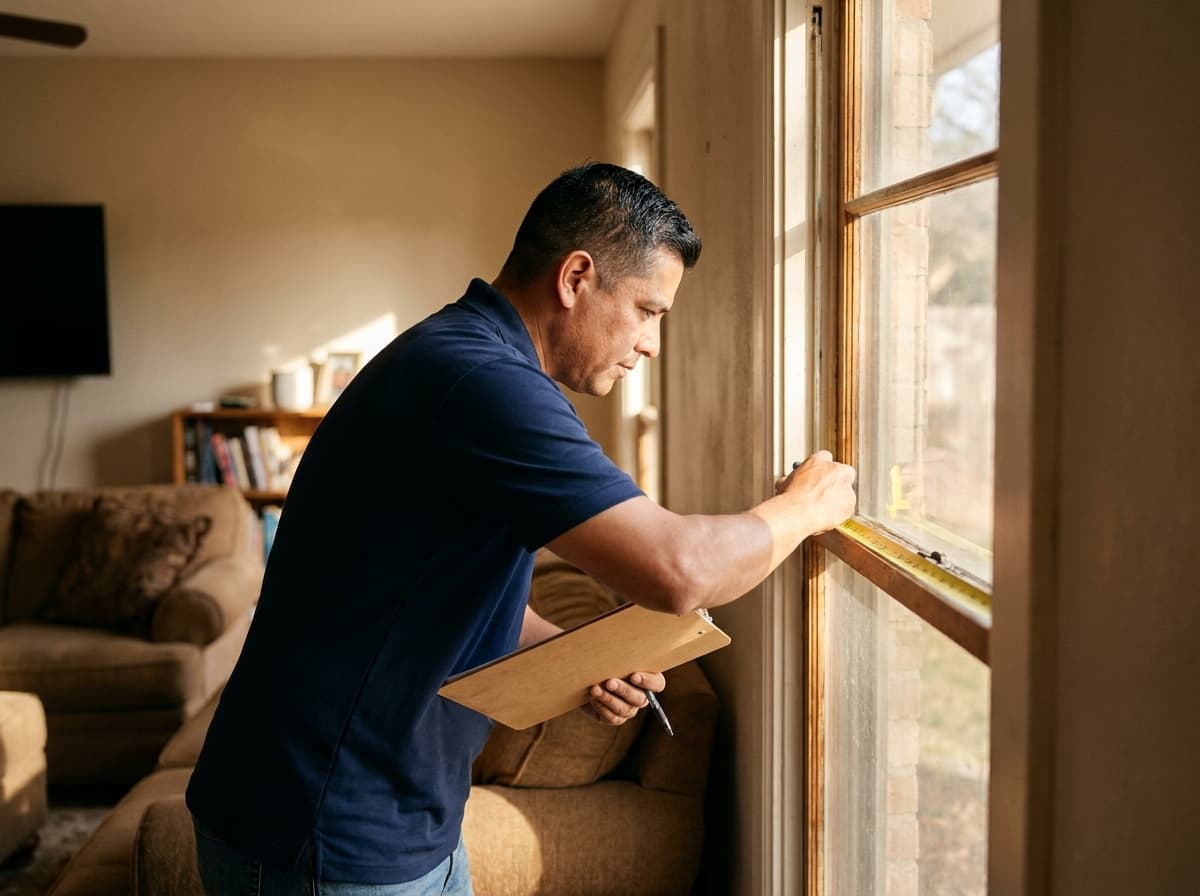
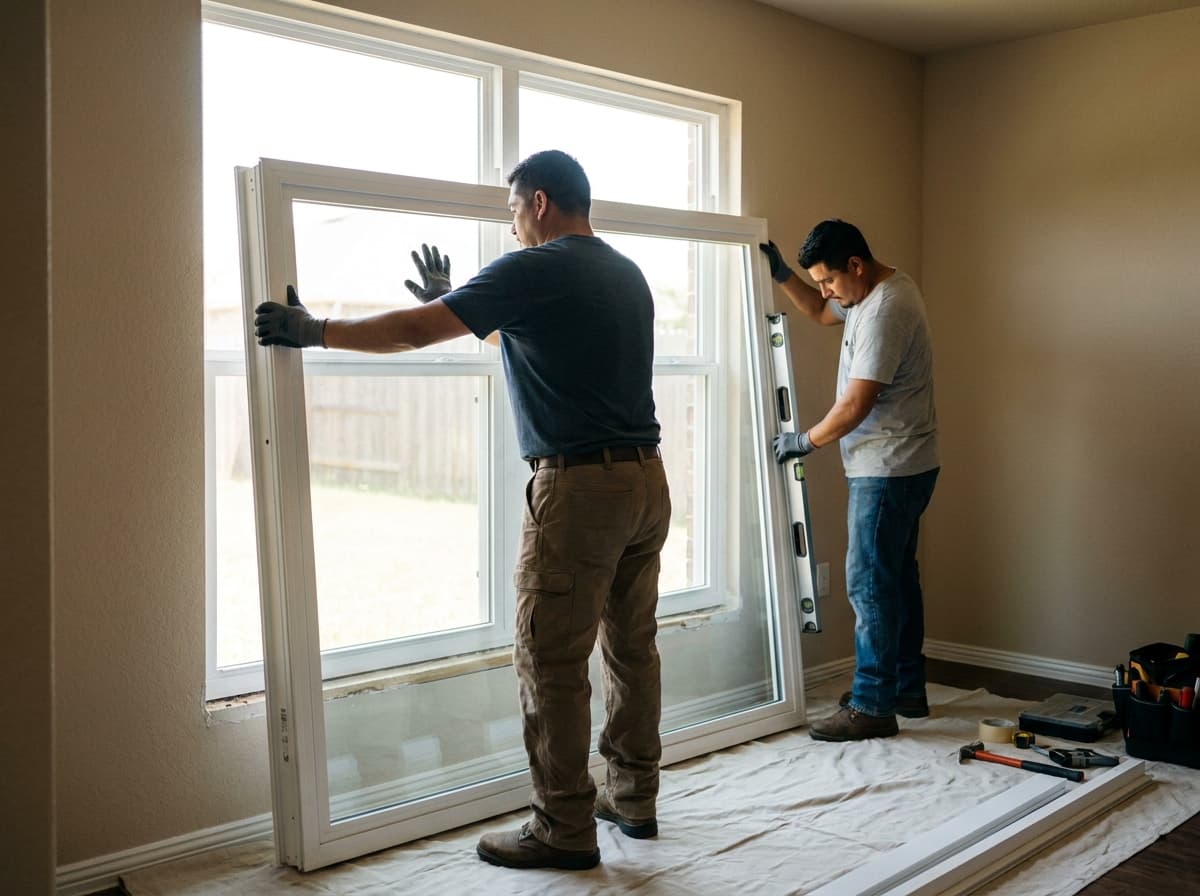
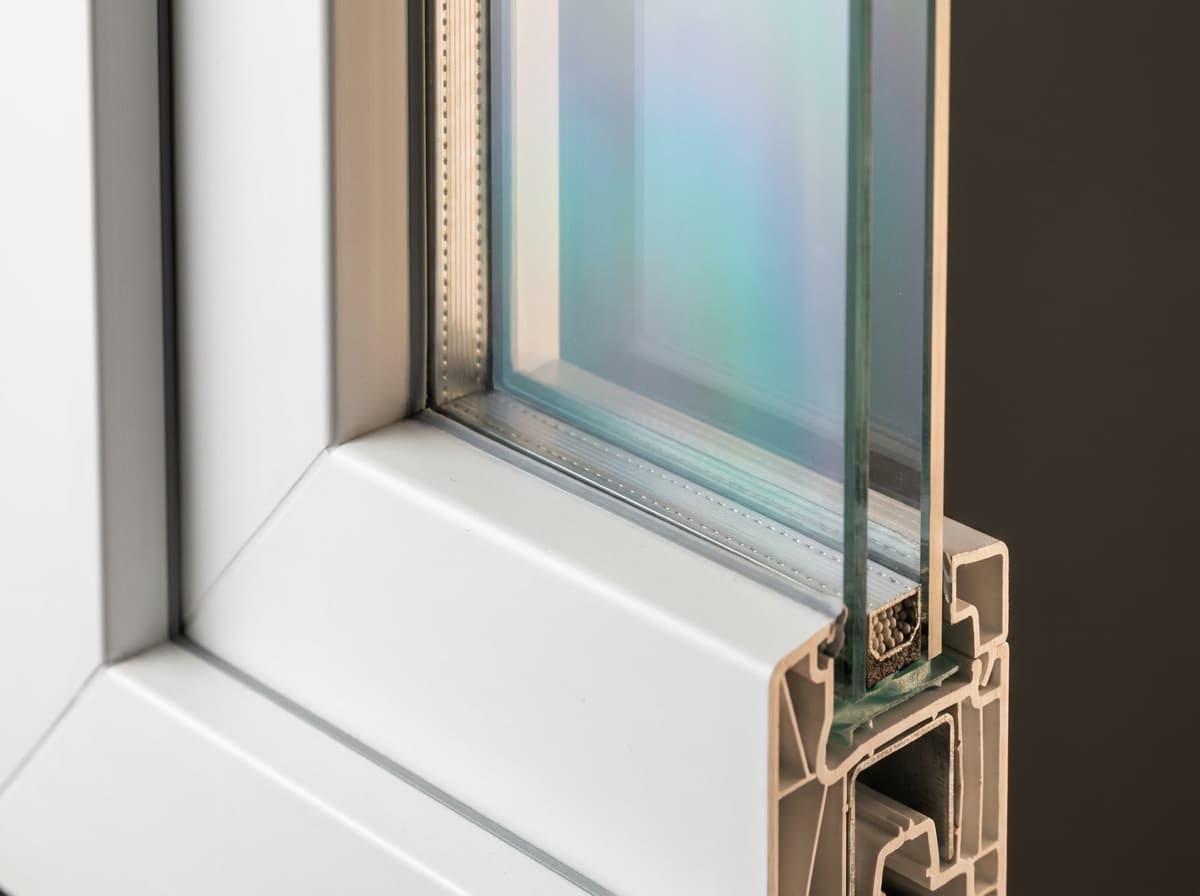
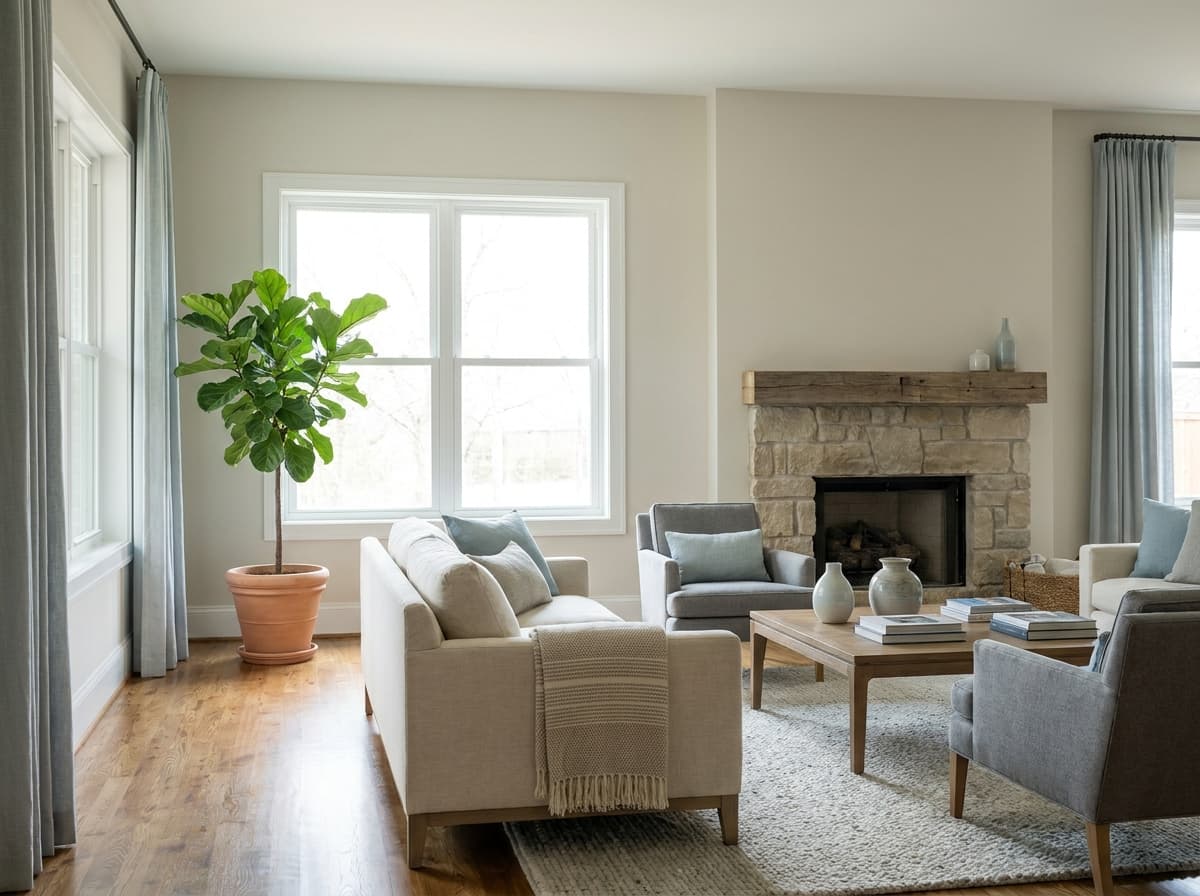
Illustrative images of the product and installation type.
Roughly what it costs, before anyone comes out
Almost nobody publishes this and we think that’s wrong. You’d rather know the range now than lose an afternoon to a salesperson to find out at the end.
$750–$1,500
The price moves with the size of the opening, the type of glass, and how complicated the installation is. A standard bedroom window sits at the low end of the range; a large living-room slider at the high end.
$8,000–$25,000
Most homes around here have 10 to 12 windows. If the budget doesn’t cover all of them at once, you start with the west- and south-facing ones — the ones letting in the most heat — and finish later.
We offer financing with $0 down (subject to credit approval). On the quote we put the monthly payment right next to the total price, so you can compare it against what you’re overpaying on electricity.
See financingReference ranges for the Dallas–Fort Worth market, 2026. Source: Dallas–Fort Worth window replacement pricing guides, 2026. The price for your home is set in the quote.
From the call to the install, step by step
- 1
You leave us your info
Fill out the form or call us. We ask the basics: how many windows, what city, and when you need it done.
- 2
You pick the day
You choose the time that works for you, weekends included. We’re available 8am to 8pm, seven days a week.
- 3
We come and measure
Alan, the owner, comes to your home. He measures every opening, checks the condition of the frames, and tells you what’s worth replacing and what isn’t.
- 4
You get the price in writing
Total price, monthly payment options and warranty, all on paper. No pressure to sign on the spot — take it and think it over.
- 5
We build and install
The windows are made to fit your openings. A typical home is finished in one or two days of work.
What people ask us most
How much does it cost to replace the windows in my home?
In the Dallas–Fort Worth area, an installed window runs from $750 to $1,500 depending on size, glass type and how complicated the opening is. A whole home, which normally takes 10 to 12 windows, lands between $8,000 and $25,000. We give you the exact number for your home in the quote, free and with no obligation — we'd rather tell you the range up front than waste your time.
Do they really pay for themselves in energy savings?
It depends on your home, and anyone who promises you an exact number without seeing it is guessing. What can be said with data: in Texas, air conditioning accounts for 50% to 70% of the summer bill, and a single-pane window is one of the main places heat gets in. How much your bill drops depends on how many windows you replace, which way they face, and how the rest of the insulation is holding up. During the visit we explain what to expect in your specific case.
Do you offer financing?
Yes. We offer financing with $0 down, subject to credit approval. On the quote we show you the monthly payment options next to the total price, so you can compare it against what you’re currently overpaying on electricity.
How long does the installation take?
Most homes are finished in one or two days of work. The windows are made to fit your openings, so a few weeks usually pass between signing and installation while the order comes in. We give you the estimated date in writing from the quote.
Can I replace just a few windows?
Yes, and often that’s the sensible move. If the budget doesn’t cover the whole house, you start with the west- and south-facing ones, which take the most sun and where you’ll feel the difference most. You finish the rest whenever you want.
Do you serve Spanish-speaking customers?
Yes — it’s how we work. Alan, the owner, is the one who comes to your home to measure and quote, in English or Spanish. There’s no call center in between and no outside salesperson: you deal directly with the person who stands behind the work.
What kind of warranty is there?
The window carries the manufacturer’s warranty and we stand behind the installation. The exact terms come in writing with your quote — never verbally. If someone offers you a warranty and won’t put it on paper, be skeptical.
Do you charge for the quote?
No. The visit, the measuring and the estimate are free and carry no obligation. If the number doesn’t work for you, that’s fine — you keep the information and decide whenever you want.
Before the next bill shows up, get them measured
The visit costs nothing and commits you to nothing. You walk away with a number in writing and a clear idea of what’s worth replacing — even if you decide to wait.